
Trending





















Popular people

Jakapan Puttha
Biography
"Build" Jakapan Puttha is a graphic designer and actor under his own management, Build You Love For You (บิลด์ ยัวร์ เลิฟ ฟอร์ ยู). He graduated from Bangkok University with a degree in broadcasting. He speaks both Thai and English.
In 2017, he made his acting debut in the lakorn "Yuea Phayabat" (เหยื่อพยาบาท).
On January 28th, 2023, Build announced his resignation from the company Be On Cloud (บี ออน คลาวด์) due to allegations of domestic abuse made against him and the forthcoming court battle. On February 21st, 2023, Build then began the process of suing his accuser for false accusations and it was announced in August of 2024 that the court had issued a judgement in his favour.
Read more
Madan Krishna Shrestha
Biography
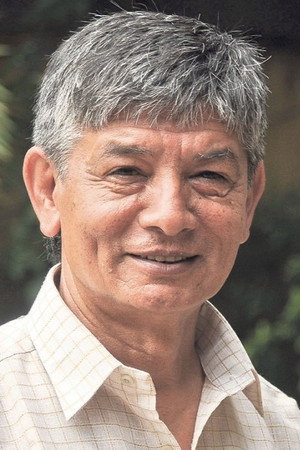
Madan Krishna Shrestha (born April 19, 1950) is a towering figure in Nepali culture, widely regarded as one of the most influential artists, comedians, and singers in the nation's history. He is best known as one-half of the legendary comedy duo MaHa Jodi, alongside his longtime professional partner Hari Bansha Acharya. Together, they revolutionized Nepali entertainment by using satirical comedy and telefilms—such as Lal Purja, Hari Bahadur Madan Bahadur, and 15 Gatey—to tackle deep-rooted social and political issues like corruption, healthcare, and human rights. Beyond his comedic brilliance, Shrestha is a highly respected singer and author, known for his soulful voice and his moving autobiography, Mahako Ma. Even as he has faced personal health challenges like Parkinson’s disease in recent years, he remains an active and beloved national icon, continuing to advocate for social change and contributing to the arts well.
Read more

Yanis Sahraoui
Biography
Yanis Sahraoui (born 16 September 1988) is a French pop musician and singer-songwriter.
They debuted in the late 2000s under the stage name Sliimy (pronounced "Slimmy") through social networking websites where they released their songs. The artist soon received attention online and signed into recording label Warner Music Group, releasing the single Wake Up and their debut album Paint Your Face in 2009, which reached number 2 in the French charts. The singer then performed on stage, in concerts and in opening acts for Britney Spears and Katy Perry.
The artist, singing mostly in English with an accent that has been described as "mockney", with androgynous looks and a falsetto voice, was compared to Mika or Prince by the press. They were sometimes also dubbed "the French Mika" in their native France and internationally.
In 2015, the singer began performing as Yanis, and released the EP L'heure Bleue in 2016.
Yanis Sahraoui was born on 16 September 1988 in Saint-Étienne, Loire. Of Moroccan and Algerian descent, Yanis grew up in the neighborhood of Vivaraize, along with their three sisters and brother. Yanis studied at high school before going to the university of Notre-Dame Valbernoîte.
"I participated in choir at school. Otherwise, I would sing by myself! In 2005, I won a contest and then suddenly I recorded my first song. What's funny is that I put the video on my blog, but people wouldn't believe it was me." – Yanis
In 2005, Yanis won a singing contest at Pax in Saint-Etienne, and won a record in a studio where Yanis met Etienne Feed, who became their partner and guitarist.
In their late teens, Yanis began using the online alias "Sliimy": from the English word "slim", referring the artist's slender frame and a double I, which according to Yanis, visually represent two thin legs. As Sliimy, the singer used social networking websites such as Myspace where they uploaded recordings of their songs. The artist was met with success online, and with their guitarist they eventually signed into recording label Warner Music Group. The singer received more international attention in late 2008 after their cover of Britney Spears's song Womanizer was featured by American blogger Perez Hilton.
Sliimy's debut album Paint Your Face was recorded at the artist's home studio in Saint-Étienne in January 2009. In February 2009, Yanis was part of the coming-nexts du Grand Journal in Canal+. Their first single was titled Wake Up and made available on legal music download platforms. Paint Your Face was mixed at Trout Recording Studio in New York in March by Bryce Goggin, who has worked with Antony and the Johnsons and Pavement. It was released on 6 April 2009 by Warner.
As "Sliimy", they opened for Britney Spears's Circus Tour in Paris-Bercy in France in July 2009.
In addition to having been the first part of Britney Spears's tour, Sliimy also went on tour with singer Katy Perry for the Hello Katy Tour in Switzerland and England in 2009. A few months later, the artist made a surprising appearance in the music video for the hit song I Gotta Feeling by The Black Eyed Peas in the album The END. ...
Source: Article "Yanis (singer)" from Wikipedia in English, licensed under CC-BY-SA 3.0.
Read more
Yann Arthus-Bertrand
Biography
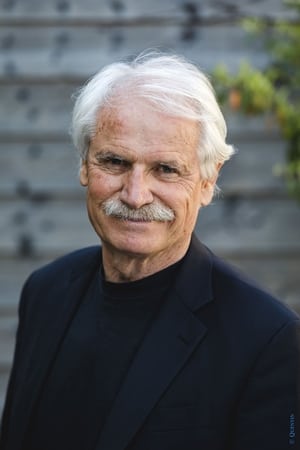
Yann Arthus-Bertrand (born 13 March 1946) is an environmentalist, activist, journalist and photographer. He has also directed films about the impact of humans on the planet. He is especially well known for his book Earth from Above (1999) and his films Home (2009) and Human (2015). It is because of this commitment that Yann Arthus-Bertrand was designated Goodwill Ambassador for the United Nations Environment Programme on Earth Day (22 April 2009).
Reference: Wikipedia contributors. (2021, 27 janvier). Yann Arthus-Bertrand. Wikipedia.
Read more

Haris Alexiou
Biography
Haris Alexiou (Greek: Χάρις Αλεξίου, born 27 December 1950 in Thebes, Greece as Hariklia Roupaka, Greek: Χαρίκλεια Ρουπάκα) is a Greek singer. She is one of the most popular singers in Greece and has been commercially successful since the 1970s. She has worked with important Greek songwriters and composers, has performed at top musical theatres all over the world, and has received several awards. She has recorded over thirty albums and has been featured on albums of other musicians. Eight of her personal albums released between 1977 and 2003 have surpassed 1.5 million sales, the only Greek female singer to do so.
From Greece to Australia, from Russia to Africa, from America to Japan, Haris Alexiou travels around and shows the world the feelings of the Greek song. She firmly believes that Greek songs, through their poets and composers, made her love and better understand the history and the culture of her country.
Since late 2022, Alexiou has appeared as the grandmother Haris in the Greek television series Maestro in Blue on Mega Channel in Greece and Netflix worldwide.
Read more
Jonathan Baker
Biography
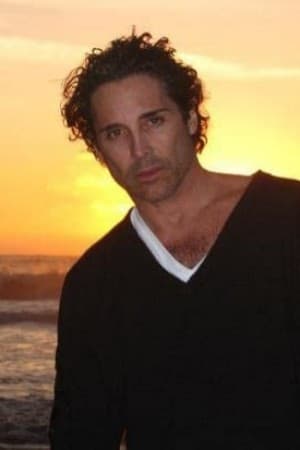
Jonathan Baker has always been enthralled by smart storytelling and larger-than-life figures, taking inspiration from greats like Ernest Hemingway to guide his own sensibilities as a writer, producer, director and adventurer. Studying film in his native New York City and at USC in his undergraduate years, Jonathan Baker began his entertainment industry career as a writer, director and producer of projects such as Through Scavullo's Eyes, a Warner Bros. documentary on controversial fashion photographer Francesco Scavullo; Dorf on Golf, a sports spoof with Tim Conway; and Dirty Tennis, a comedy starring Dick Van Patten, Nicolette Sheridan and Bruce Jenner that aired on HBO and Cinemax, winning the VSDA and the New York Film Festival Award for Best Comedy Video of the Year. More recently he founded Baker Entertainment Group, a multimedia development and production company based in Hollywood.
Baker is also a successful entrepreneur who grew a start-up venture, SkinSpa, into the leading full-service day spa in the U.S. before selling that brand
in 2011. While focusing on Baker Entertainment Group and his evolving work as a film director, he remains active in the personal care field and has currently developed a new signature brand, Jonathan Baker EST 1962, which introduces its first line of many pure aromatherapy products. Jonathan's men casual clothing line is due out next.
Read more

Anthony Bajon
Biography
Anthony Bajon (born 7 April 1994) is a French actor. He is best known for his leading role in the film The Prayer (2018), which earned him critical appreciation and the Silver Bear for Best Actor.
Anthony Bajon began his acting career at the age of 12 on the stage of theater. Since then he has performed regularly in various theaters in France.
In 2015, Bajon debuted in Léa Fehner's film Les Ogres, after which he starred in the films Rodin by Jacques Doillon, and André Téchiné's Golden Years among others.
In 2018, Anthony Bajon played the lead role of 22-year-old drug addict Thomas in Cédric Kahn's movie The Prayer. For this role, he received the Silver Bear for Best Actor at the Berlin International Film Festival, becoming the seventh French actor in history of the festival to be honored with this award.
Source: Article "Anthony Bajon" from Wikipedia in English, licensed under CC-BY-SA 3.0.
Read more

Kaniha
Biography
Divya Venkatasubramaniam (born 3 July 1982), best known by her stage name Kanika (known in Malayalam film industry as Kaniha),is an Indian film actress, occasional dubbing artist, playback singer, and TV anchor. Making her debut in the 2002 Tamil film "Five Star", she went on to work in other South Indian film industries, including Telugu, Malayalam and Kannada, as well. She is perhaps best known for her performances as Eashwari in her debut film "Five Star", Gayathri in "Varalaru - History of Godfather" and Thenmozhi in "Autograph". She made waves in the Malayalam film industry with back to back successful films Bhagyadevatha and Pazhassi Raja.
Read more
Arly Jover
Biography
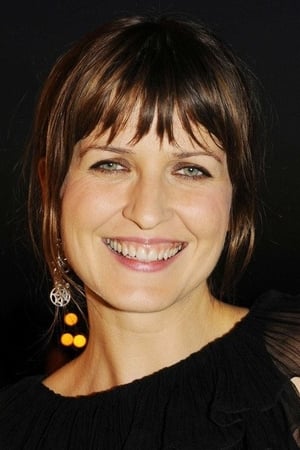
Araceli Jover was born in Melilla, a Spanish region. After living there for five years, her family was forced to move to Mallorca, in the Balearic Islands (Spain) because of her father's work as a soldier. She is the youngest of seven siblings, four sisters and three brothers.
During her early years, she wanted to become a dancer. She began dancing at the age of 8. At 14 she dropped out of school and at 15 she won a scholarship from the Comité Hispano Norteamericano. Because of this, she left Spain and moved to New York City in order to continue to study at the School of American Ballet under Martha Graham. After two years and half in the United States, her career then moved on to becoming an actress sometime around 1995–1996. She had her first role in an episode of the TV show Women: Stories of Passion and starred in two international films Tango, and The Ballad of Johnny-Jane. After that, she did more work in TV, before making her first American film debut in Blade, in 1998, as Mercury; the vampire lover of Deacon Frost.
Read more

Nur Sürer
Biography
Nur Sürer (born 21 June 1954) is a Turkish actress.
She completed her education at Bursa Anatolian Girls' High School. She started her career in cinema with Erden Kiral's Bereketli Topraklar Üzerinde (On Fertile Soils) and won the "Best Actress" award twice at the Antalya Golden Orange Film Festival. To date, she has appeared in more than forty films and television series. Her first international work was the film Ayna in 1984. This film won the Oscar Award for "Best Foreign Language Film" in 1991. Umuda Yolculuk (1990), Dunkle Schatten der Angst (1993) and Yara (1998) followed.
She married Bülent Kayabas for the first time in 1981. She later married Sarp Kuray, who was sentenced to life imprisonment for being the leader of the armed leftist organisation 16 June Movement. Sürer, who is closely interested in women's rights, is also known for her political stance. In 2007, she participated in the 1 May celebrations in Istanbul and was detained by the police but was released one day later.Sürer played the character of "Neriman Kozcuoglu" in the TV series Asi, which was broadcast on Kanal D between 2007-2009.
In 2021, Surer returned to the cinema with the film Sen, Ben Lenin and continued his TV acting career with the 2023 TV series Aile.
Read more