
Trending







Popular people
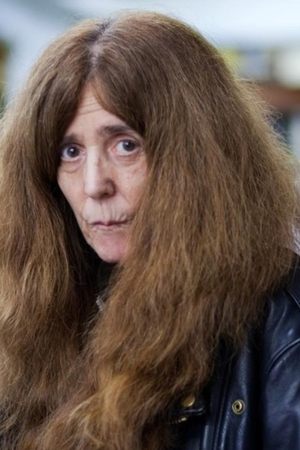
Elizabeth Swados
Biography
Elizabeth Swados was an American writer, composer, musician, and theatre director. Swados received Tony Award nominations for Best Musical, Best Direction of a Musical, Best Book of a Musical, Best Original Score, and Best Choreography. She was nominated for Drama Desk Awards for Outstanding Director of a Musical, Outstanding Lyrics, and Outstanding Music, and won an Obie Award for her direction of 'Runaways' in 1978. In 1980, the Hobart and William Smith Colleges awarded her an honorary doctorate in Humane Letters.
Read more

Rita Batata
Biography
Rita Batata (born January 2, 1986) is a Brazilian actress.
Rita Batata has been active since the age of 16, working in theater, film and television. She graduated in Performing Arts from the INDAC Course of Actors. Her debut in the theater was in 2003 when starring in the play ' Belinha and the Beast '; since then, Batata has performed in several plays. She is the protagonist of De Menor, a film of Caru Alves de Souza that won the best fiction prize of the Rio Festival in 2013.
From Wikipedia, the free encyclopedia
Read more
Audrey Morrison
Biography
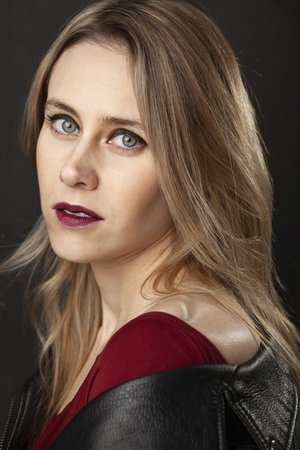
Audrey Morrison is a SAG-AFTRA actress and filmmaker who divides her time between LA & NM and loves to travel within the US and abroad. Originally from Venice, CA, she has appeared on Nickelodeon, Paramount, ABC, and Showtime (having recently co-starred in "The Curse" with Emma Stone) and played lead and supporting roles in independent films. She graduated from the S. I. Newhouse School of Public Communications at Syracuse University. While attending one of the best mass communications programs in the country, she developed an interest in the television and film industries that changed the course of her professional career. She's managed by Aegis Talent in LA and represented by Carissa Mitchell at Mitchell & Associates Talent.
Read more

Marie Wald
Biography
Marie Wald is a cinematographer with a strong focus on emotional depth and visual storytelling.
Originally from Germany and a graduate of the University of Television and Film Munich (HFF), she began her career in Mexico, working as a cinematographer, camera assistant and photographer.
Now based between Mexico and Germany, Marie works internationally across Europe and Latin America, contributing to documentaries, fiction, and commercial productions.
Fluent in English, French and Spanish, her global perspective shapes her work, infusing it with honesty and visual impact. With a keen eye for detail, she brings authentic, human stories to life.
Trained as a diver and surfer, she also specializes in underwater cinematography, broadening her storytelling techniques.
With the film Via Danisinni she was nominated for the German Cinematography Award 2025.
Read more
Koula Agagiotou
Biography
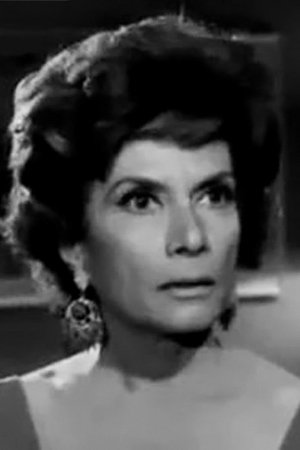
Koula Agagiotou (Greek: Κούλα Αγαγιώτου; 1915 – 25 October 2006) was a Greek actress. She is probably best known for her role in the Greek sitcom To Retire.
Agagiotou's real name was Angeliki. She appeared in more than fifty films, including a well-received performance in the 1971 film Evdokia. Her last appearance was in To Retire. Agagiotou was married and had a daughter. Agagiotou made her film debut in 1951. She mostly appeared in dramas, and during the 1980s she participated in cult comedies such as Kamikazi Agapi Mou alongside Stathis Psaltis.
Read more

Fuki
Biography
In 2011, made a major debut as the vocalist of LIGHT BRINGER.
He is characterized by a voice volume that stands out among the young Japanese heavy metal world and a penetrating high tone voice.
He has strong metal vocals, a bright, popping voice, and theatrical expressiveness.
He also narrates variety shows, radio MCs, sings character songs for games, etc., and is working on various voice expressions that are not bound by band activities and vocalists.
He has a deep knowledge of novels, manga, and anime since he was a girl, and he especially likes "JoJo's Bizarre Adventure".
He also belongs to the doujin circle Unlucky Morpheus under the name Fuyuki Tenge, and has been interacting with fans at comic markets and other places since 2008.
He is active in a wide range of fields, such as participating in various projects as a solo singer Fuki, and continuing with independent CD production and live performances as Tenge Fuyuki.
In 2016, he belongs to Amuleto. His long-awaited first solo album will be released in the early summer of 2016 with his solo project "Fuki Commune".
Read more
Richard Syms
Biography
Richard Syms is a British male actor and vicar born in London , England , UK in 1943. His acting career spans both film and television, with his works covering genres such as fantasy and drama.
Richard Syms began his career by appearing in the television series Rumpole of the Bailey in 1980, and subsequently participated in numerous film and television productions. Between 1994 and 1996, he appeared in films such as A Dark Adapted Eye and Secrets & Lies, portraying roles including that of a priest. In 2003, he starred in the television series Horatio Hornblower: Duty, and in 2010, he appeared in Sherlock and Cemetery Junction. In 2016, he featured in works such as Alice Through the Looking Glass , Their Finest, and The Crown . His co-stars have included Martin Freeman and Olivia Colman , among others.
Read more
Eduardo Mamede
Biography
Born in 1989 in Imperatriz, Brazil, Eduardo Mamede began his artistic journey over a decade ago. He completed his degree in fashion design at the University of Amazonia and furthered his studies in audiovisual media in São Paulo. In 2019, Mamede relocated to Berlin, where he continues to pursue his passion.
Mamede's artistic pursuits encompass photography and film direction. Notably, a significant portion of his portfolio showcases images captured using smartphones, a deliberate choice that not only contributes to the aesthetic of his work but also emphasizes the power of the eyes in capturing fleeting moments of connection between photographer and subject. This approach highlights the documentary nature of his output, centered around people and their stories, striving to create meaningful connections. Mamede's work thrives on his unique creative vision and his undeniable empathetic character.
Read more
Hend Sabry
Biography
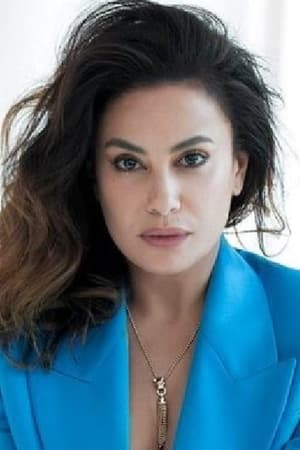
Hend Sabry is a Tunisian actress. She was born in Kebili province in Tunisia and holds a degree in Intellectual Property. She is known for her work in Egyptian cinema and television and resides in Cairo. Sabry first appeared in the films The Silences of the Palace (1994) and The Season of Men (2000) by director Moufida Tlatli. She gained the attention of Egyptian director Inas El-Degheidy who would eventually cast her as the lead in the controversial film Journals of a Teenager in 2001. Among her most notable roles were those in films like Daoud Abdel Sayed's A Citizen, a Detective and a Thief (2001), Marwan Hamed's The Yacoubian Building (2006) and Ibrahim El-Abyad (2009), and the television series “Ayza Atgawez” (I Want to Get Married).
Read more
Shaam
Biography
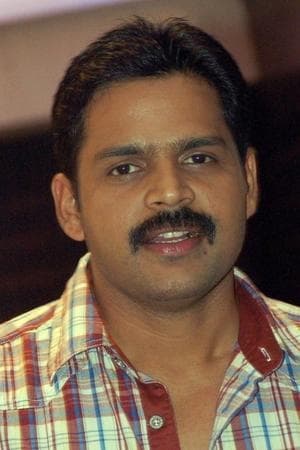
Shamshuddin Ibrahim, known professionally as Shaam (born April 4, 1977), is a Tamil film actor and model. Starting his career as a professional model, he soon made his acting debut in the film Khushi (2000), appearing in a cameo role. He further appeared in lead roles in critically and commercially successful films such as 12B, Anbe Anbe, Iyarkai, Ullam Ketkumae and the Telugu film Kick. In 2006, he made his debut in Kannada film through Tananam Tananam with Ramya and Rakshita directed by Kavitha Lankesh.
Read more