
Trending




Popular people
John Furey
Biography
From Wikipedia, the free encyclopedia.
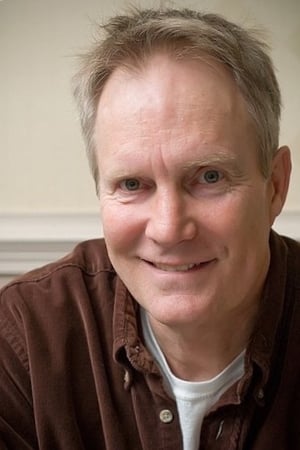
John Furey is an American actor who has starred in film and on television. He is best known for his role in the 1981 horror film Friday the 13th Part 2 as Paul Holt. His most recent film is the 2005 movie The Galindez File.
Furey appeared on the soap opera All My Children as Lee Hawkins in 1998. Furey has made guest appearances on such TV shows as Eight Is Enough, CHiPs, Queer as Folk, and CSI: Crime Scene Investigation.
He is married to actress Denise Galik.
John Furey's sister, Kathleen Furey, is an actress/casting director. She teaches teen acting courses in many places on Long Island, New York.
Description above from the Wikipedia article John Furey, licensed under CC-BY-SA, full list of contributors on Wikipedia
Read more
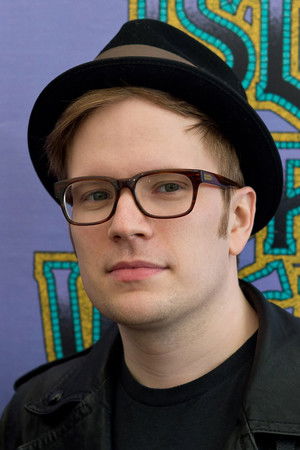
Patrick Stump
Biography
Patrick Martin Stumph (born April 27, 1984), known professionally as Patrick Vaughn Stump, is an American musician, singer, and songwriter. He is the lead vocalist and rhythm guitarist of the rock band Fall Out Boy, originally from Wilmette, Illinois.
His solo work has been described as "funky and R&B infused", while Billboard noted him as "one of the best voices in pop punk". Fall Out Boy has achieved four top ten singles on the US Billboard Hot 100 and four number one albums on the Billboard 200, firstly with Infinity on High in 2007, and again in 2013 with Save Rock and Roll, 2015 with American Beauty/American Psycho, and 2018 with Mania. Stump has collaborated with other artists (including Damnation A.D. and Timbaland) and has produced albums for artists including Cobra Starship and Gym Class Heroes.
After Fall Out Boy's hiatus in late 2009, Stump released his debut solo album, Soul Punk, on October 18, 2011. It was preceded by the six-song EP titled Truant Wave on February 22, 2011. He toured in the US and Europe in support.
Fall Out Boy returned from hiatus in February 2013 with the album Save Rock and Roll, and the EP PAX AM Days. In January 2015, their sixth album American Beauty/American Psycho was released, while in January 2018 their seventh album Mania was released, both debuting at No.1 on the Billboard 200.
Description above from the Wikipedia article Patrick Stump, licensed under CC-BY-SA, full list of contributors on Wikipedia.
Read more
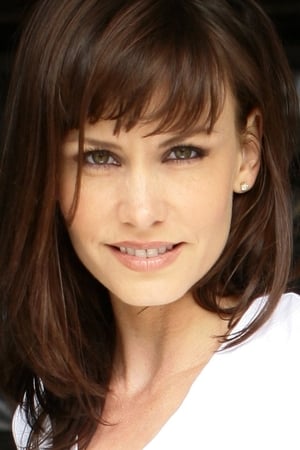
Anne Openshaw
Biography
Anne Openshaw is a Canadian actress hailing from Surrey, British Columbia. She is best known for her recurring role as Alice Fitzpatrick in the television series Call Me Fitz, a performance that earned her a nomination for Best Supporting Actress in a Comedy Series at the 3rd Canadian Screen Awards in 2015.
Openshaw's acting career spans both film and television. She had a leading role as Kathleen Ford-McNeal in the 2007 television miniseries Across the River to Motor City and portrayed Lois Smart in the 2017 television film I Am Elizabeth Smart. Her filmography includes roles in Narc (2002), The Grey (2011), and American Mary (2012).
In addition to her notable roles, Openshaw has appeared in over sixty productions, demonstrating her versatility as an actor. Some of her other television credits include Breaker High, Cold Squad, First Wave, Earth: Final Conflict, and Stargate Atlantis. Her film credits include Dangerous Indiscretion, Bounty Hunters, Fatal Reunion, and The Diary of a Wimpy Kid: Dog Days.
Openshaw's performances have been well-received, with her roles in Narc and The Grey earning high ratings on Rotten Tomatoes. As of 2023, her net worth is estimated at around $800,000. Despite her extensive career, little is known about her personal life.
Read more
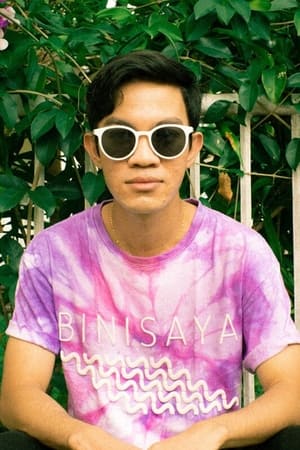
Carl Joseph Lara
Biography
Born in the Philippines in 2000, Carl Joseph Lara is a writer/director/editor. He graduated with a degree in Fine Arts majoring in Cinema from the University of San Carlos, Cebu. His student documentary short film, KAHAYAG SA KANGITNGIT (2021) won the Shorts Jury Prize and Audience Choice Awards at the BINISAYA Film Festival and was exhibited in local film festivals. He explores psychoanalysis, cultivating his keenness on the themes of humanity and the mind while transcending folkloric elements. He is currently the community director of BINISAYA Film Festival.
Read more
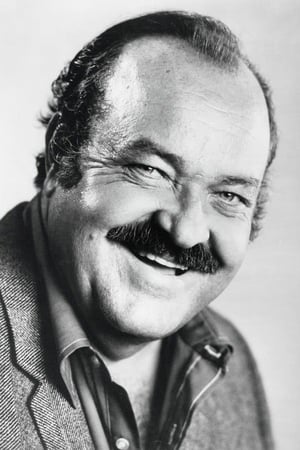
William Conrad
Biography
William Conrad (September 27, 1920 - February 11, 1994) was an American actor, producer, and director. He was born William Cann in Louisville, Kentucky, the son of a theatre-owner who moved to southern California, where he excelled at drama and literature while at school. Starting work in radio in the late 1930s in California, Conrad went on to serve as a fighter pilot in World War II. He entered the army in 1942, and was commissioned at Luke Field, Arizona in 1943 (now Luke Air Force Base). On the day of his commission he married June Nelson. He returned to the airwaves after the war, going on to accumulate over 7,000 roles in radio by his own estimate.
Among Conrad's various film roles, where he was usually cast as threatening figures, perhaps his most notable role was his first credited one, as one of the gunmen sent to eliminate Burt Lancaster in the 1946 film The Killers. He also appeared in Body and Soul (1947), Sorry, Wrong Number, Joan of Arc (both 1948), and The Naked Jungle (1954).
As a producer for Warner Brothers, he made a string of feature films, including An American Dream (1966, retitled See You in Hell, Darling for British release), A Covenant With Death (1966), First to Fight (1967) and The Cool Ones (1967), and also directed My Blood Runs Cold, Brainstorm and Two on a Guillotine (all 1965).
Read more
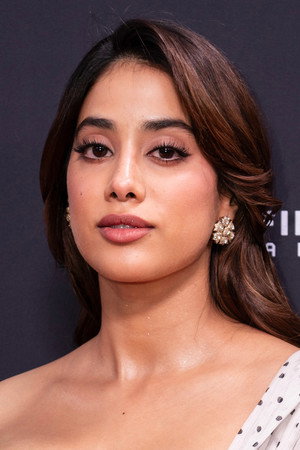
Janhvi Kapoor
Biography
Janhvi Kapoor (born March 6, 1997) is an Indian actress who works predominantly in Hindi and Telugu cinema. She made her feature film debut in *Dhadak* (2018), winning the Zee Cine Award for Best Female Debut. She subsequently appeared in the anthology *Ghost Stories* (2020) and earned a Filmfare Award for Best Actress nomination for the biographical drama *Gunjan Saxena: The Kargil Girl* (2020).
Her subsequent releases include *Roohi* (2021), *Good Luck Jerry* (2022), *Mili* (2022), *Bawaal* (2023), *Mr. & Mrs. Mahi* (2024), and *Ulajh* (2024). That same year, she made her Telugu cinema debut in *Devara: Part 1* (2024). Her later releases includes *Sunny Sanskari Ki Tulsi Kumari* (2025), *Param Sundari* (2025), *Homebound* (2025), the Telugu feature *Peddi* (2026).
Read more
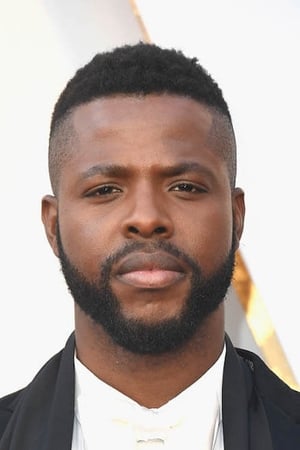
Winston Duke
Biography
Winston Duke (born 15 November 1986) is a Tobagonian actor. Duke was born in Tobago and moved to Brooklyn, New York, United States, at age nine.
Duke began his career with minor roles in theatre productions and recurring roles on the CBS science fiction series Person of Interest (2014–2015) and the ABC sitcom Modern Family (2016). He rose to prominence after playing M'Baku in several films of the Marvel Cinematic Universe, which is one of the highest-grossing media franchises. He has since taken roles in the horror film Us (2019), the fantasy drama film Nine Days (2020), and the action comedy films Spenser Confidential (2020) and The Fall Guy (2024).
Description above from the Wikipedia article Winston Duke, licensed under CC-BY-SA, full list of contributors on Wikipedia.
Read more
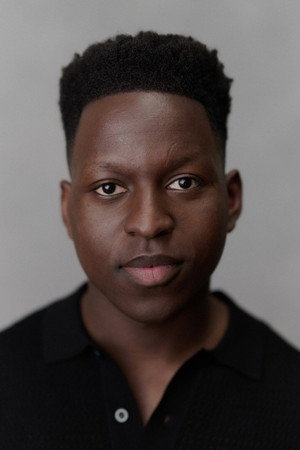
Toheeb Jimoh
Biography
Toheeb Gbolabo O. Jimoh (born 15 April 1997) is an English actor. He earned a Primetime Emmy Award nomination for his performance as Sam Obisanya in the Apple TV+ series Ted Lasso (2020–2023). He is also known for his roles in the BBC One biographical film Anthony (2020) and the Amazon Prime series The Power (2023). Jimoh was born on 15 April 1997 in Brixton, South London to parents of Nigerian descent. He moved to Nigeria as a toddler and returned to London when he was seven. He attended The Norwood School before going on to train at the Guildhall School of Music and Drama, graduating in 2018.
Jimoh was a relative newcomer to acting when he was cast to play Anthony Walker, the victim of a 2005 racist attack, in BBC One's Anthony, which imagines Walker's life if he had not been killed. His portrayal was called "utterly magnetic". He then portrayed Marcus in the Amazon series The Feed.
Jimoh was in a stage production of A Midsummer Night's Dream at the Sheffield Crucible and in 2020, was one of six performers in the Almeida Theatre's Christmas Play Nine Lessons and Carols, the theatre's first production post London's COVID-19 lockdown.
When Jimoh auditioned for Ted Lasso, the character of Sam Obisanya was written as Ghanaian, but his background was changed to Nigerian to match Jimoh's own. His performance has received praise, with his character called the "heartbeat" of the show.
Jimoh portrays another Nigerian character, journalist Tunde, in the Amazon thriller series The Power, based on Naomi Alderman's novel of the same name. He also has a small part in the Wes Anderson film The French Dispatch. Jimoh played Romeo in a summer 2023 production of Romeo and Juliet at the Almeida Theatre in London. In 2024, Jimoh played Hal in Player Kings, an adaption of Shakespeare's Henry IV part 1 and 2 by Robert Icke which also co-stars Ian McKellen and Richard Coyle.
Read more
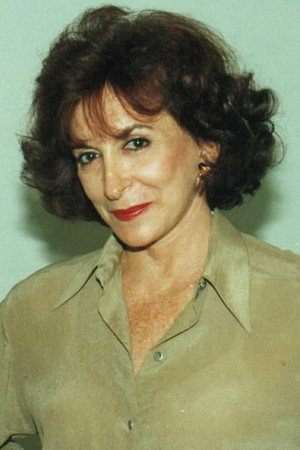
Tereza Rachel
Biography
Tereza Rachel, stage name of Teresinha Malka Brandwain Taiba de La Sierra (Nilópolis, March 10, 1934 — Rio de Janeiro, April 2, 2016), was a Brazilian actress and theater producer. Considered one of the great names in national theater, she has starred in and produced several plays since the 1950s, in addition to founding Teatro Tereza Rachel in 1971. After The Next Victim (1995), she retired from acting, making rare cameo appearances from then on.
On television, she gained prominence in works such as O Astro (1977), Baila Comigo (1981) and Que Rei Sou Eu? (1989).
Read more

Gaurav Chakrabarty
Biography
Gaurav Chakrabarty is an Indian Bengali film and television actor best known for his portrayal of the character Prodipto Lahiri in the Bengali musical TV series Gaaner Oparey that aired on Star Jalsha from 28 June 2010 to 16 April 2011, and specially for the Bengali classic periodic thriller TV series Byomkesh (2014-2015), where he played the role of iconic Bengali detective Byomkesh Bakshi. He hails from a family which has had a legacy of association with the Bengali cultural arena, starting from Jochhon Dastidar and Chandra Dastidar (his paternal great uncle and aunt), Bijon Bhattacharya (his paternal great uncle), Jagadish and Monika Chakrabarty (his paternal grandparents), and his parents Sabyasachi Chakrabarty and Mithu Chakrabarty. He debuted on the big screen in Kaushik Ganguly's Rang Milanti, one of the most appreciated films of the year 2011.
Read more